Hantavirus & Deer Mouse Safety Guide — South Lake Tahoe, CA
But deer mice can carry hantavirus. That's worth understanding properly — not panicking about, not ignoring, just understanding.
Deer mice are the #1 rodent up here — our deer mouse removal in South Lake Tahoe covers identification, trapping, and safe cleanup.
This is the full safety guide: what the virus is, how exposure actually happens, the safe cleanup protocol step by step, and when to stop DIYing and call a professional.
Call (530) 203-0122 · Free Inspection
What Hantavirus Actually Is (Sin Nombre Virus)
The hantavirus carried by deer mice in the western United States is called Sin Nombre virus. Here's the plain version of how it works:
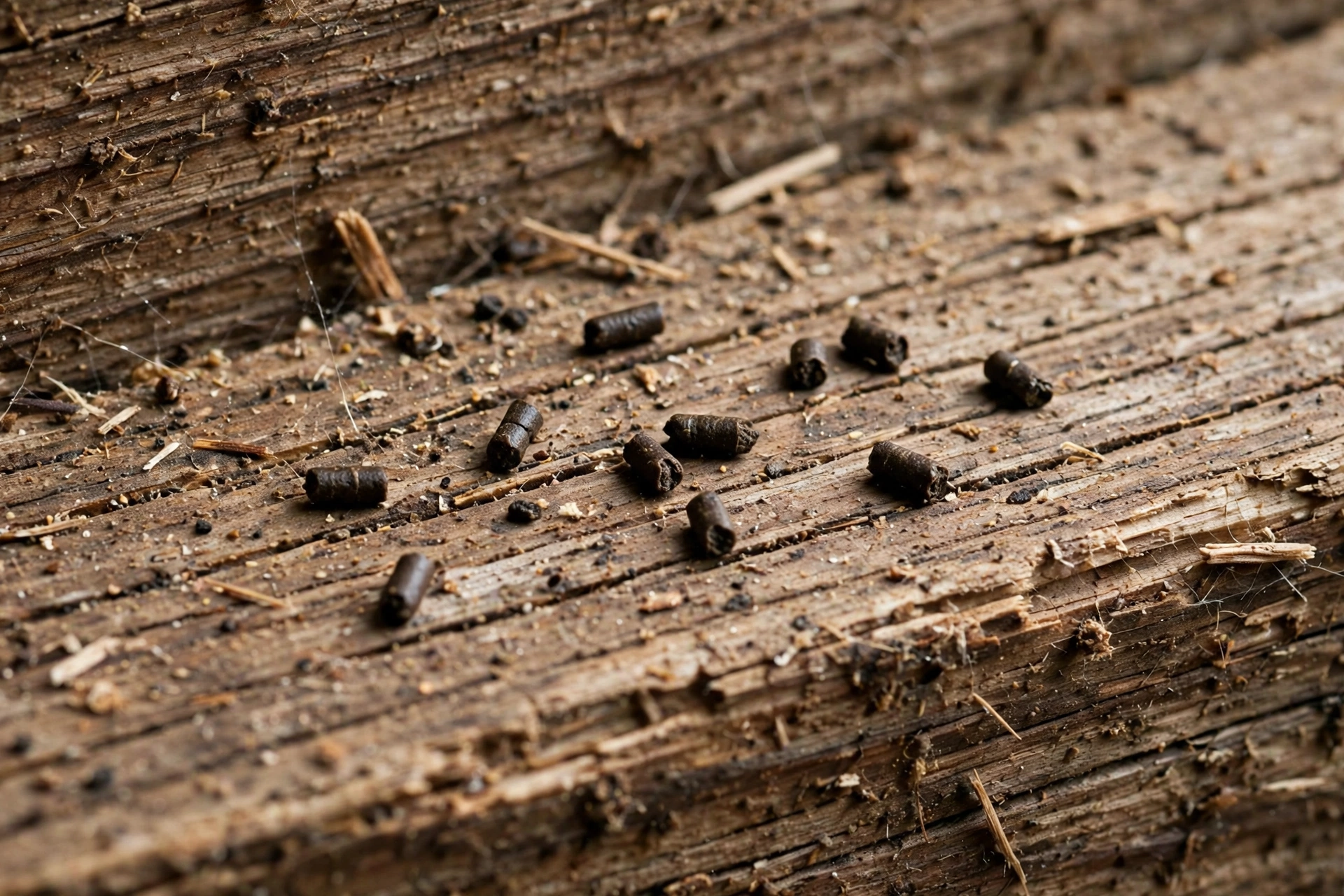
An infected deer mouse sheds the virus in its droppings, urine, and saliva. Those droppings dry out. When the dried droppings get disturbed — swept, vacuumed, kicked up, or just dried out in a closed-up cabin — tiny particles get into the air. You breathe them in. That's the exposure route.
It's not spread from person to person. It's not spread by a mouse bite in the way rabies is. It's airborne dust from contaminated droppings and urine. That's it.
Here's the honest position: the virus is not common, and most exposures don't lead to illness. But when it does cause illness, it's serious — a severe respiratory condition. Low probability, high consequence. That's why five extra minutes of safe cleanup are worth it every time — and why the mice aren't the dangerous part. The cleanup is. And the cleanup is completely in your control.
The Highest-Risk Situations in Tahoe
Not all mouse encounters carry the same risk. These are the situations where you should be most careful:
Cleaning out sheds, garages, and crawlspaces. Enclosed spaces where droppings have accumulated undisturbed. You walk in, start sweeping, and the dust goes everywhere.
Opening a second home after winter. The cabin's been closed since October. Droppings have been drying out for six months. This is the single highest-risk scenario we see in South Lake Tahoe.
Attic cleanups. Months of nesting means concentrated droppings and urine in a poorly ventilated space. Not a DIY job.
Disturbing old nests. Nests mean a breeding population and concentrated contamination. Slow down and do it right.
Sweeping or vacuuming droppings dry. The #1 mistake. A broom and a regular vacuum are the two fastest ways to put contaminated dust in the air.
Symptoms to Watch For
If you've had a heavy exposure — say you swept out a mouse-infested shed without a mask — know what to watch for. Symptoms can show up anywhere from 1 to 8 weeks after exposure, most often within 2 to 3 weeks.
Early symptoms look like the flu: fatigue, fever, and muscle aches — especially in the thighs, hips, back, and shoulders.
Later symptoms are respiratory: coughing and shortness of breath. This is the stage that makes hantavirus serious.
If you develop flu-like symptoms within a couple of months of a rodent cleanup, see a doctor and tell them you were exposed to rodent droppings. That one detail changes how they evaluate you. Don't tough it out at home if you're having trouble breathing — get medical help.
We're pest techs, not doctors. This isn't medical advice. But knowing the timeline and mentioning the exposure to your doctor is just smart.
The Safe Cleanup Protocol — Step by Step
This is the protocol. Follow it every time you clean up deer mouse droppings, and your risk drops to near zero.
Step 1: Gear Up
Rubber or latex gloves. An N95 mask or better — not a dust mask from the paint aisle. For heavy infestations, add goggles.
Step 2: Ventilate First
Open every door and window. Let the space air out for at least 30 minutes before you start. For a cabin closed all winter, give it longer.
Step 3: Wet Everything Down
Do not sweep. Do not vacuum with a regular vacuum. Spray every dropping, nest, and contaminated surface with a disinfectant or a bleach solution — about 1 part bleach to 10 parts water. Soak it thoroughly and let it sit for at least 5 minutes. The liquid keeps contaminated dust from going airborne, and it starts killing the virus on contact.
Step 4: Wipe, Don't Sweep
Use paper towels to pick up the soaked droppings and nesting material. Wipe up the wet disinfectant too.
Step 5: Bag It and Toss It
Double-bag everything in sealed plastic bags. Outdoor trash can, not the kitchen bin.
Step 6: Clean the Surfaces
Mop hard floors with disinfectant. Steam clean or shampoo carpets. Wipe down countertops and food-contact surfaces.
Step 7: Wash Up
Gloves in the trash. Hands washed with soap and warm water. Clothes washed separately in hot water.
That's it. Seven steps, maybe ten extra minutes. This is the same protocol the CDC recommends, and it works.
One exception: if you must use a vacuum, it needs to be a true HEPA-filter vacuum — and even then, wet disinfection first is better. A regular household vacuum blows contaminated air straight out the exhaust. Don't do it.
When to Call a Professional Instead of DIYing
Some situations are beyond a mop and a mask:
The infestation is in the attic or inside wall voids. Contaminated insulation, urine-soaked wood, nesting material you can't reach or safely clean. We remove contaminated insulation and sanitize with commercial-grade disinfectant. That's a pro job.
You found multiple nests. Nests mean a breeding population, and the mice are still there. Cleaning up without trapping and exclusion just tidies up for the next generation.
It's a second home that's been closed for months. The dust load after a full winter of vacancy is high. Ventilate well, and seriously consider having us do the heavy cleanup.
Anyone in the household is elderly, immunocompromised, pregnant, or has respiratory issues. Don't gamble. Call us.
One-time rodent removal starts at $199. Removal plus full exclusion starts at $349. Attic cleanup is a custom quote after we see the space.
Prevention Is the Real Fix
Prevention is the real fix: the disease is only a risk when mice get inside. Exclusion — sealing every nickel-sized gap with steel mesh, metal flashing, and sealant — eliminates the risk entirely. Snap traps in secured locations clear out the mice already inside. Monthly monitoring ($49–$59/month) keeps watch, which matters most for second homes empty through winter.
Hantavirus Safety FAQs — South Lake Tahoe
Can my dog or cat get hantavirus?▾
Dogs and cats don't get sick from hantavirus the way humans can. But pets are useful early-warning systems — a cat fixating on a wall usually means mice are behind it. Keep pet food sealed and stored off the floor.
How long does the virus survive in droppings?▾
A few days at room temperature indoors. Sunlight kills it quickly, and disinfectants — including a basic bleach solution — kill it on contact. Risk is highest with recently dried droppings in enclosed, undisturbed spaces.
Is hantavirus contagious between people?▾
No. Sin Nombre hantavirus doesn't spread person to person. The only exposure route is contact with infected rodent droppings, urine, or saliva — almost always through airborne dust during cleanup.
I already swept up droppings without a mask. Should I panic?▾
No — don't panic. Most exposures don't lead to illness. But watch yourself for flu-like symptoms over the next few weeks, and if you get sick, tell your doctor about the rodent exposure. And next time, use the wet protocol above.
Are roof rats a hantavirus risk too?▾
Roof rats aren't the hantavirus carriers — deer mice are. And roof rats are rare at 6,225 feet anyway. If you're seeing mice in your Tahoe home, you're almost certainly dealing with deer mice or house mice.
Don't Panic. Just Do It Right.
Hantavirus is rare. The cleanup protocol is simple. The prevention — sealing your house — eliminates the risk entirely. That's the whole story.
Found deer mouse activity in your home? Call (530) 203-0122. Free inspection — we'll show you what's going on and get it handled safely.