Rat Removal in South Lake Tahoe, CA — An Honest Look at Rats at 6,225 Feet
Rat Removal in South Lake Tahoe, CA — An Honest Look at Rats at 6,225 Feet
But rats do exist up here in small numbers, and when they're present, they're worth taking seriously. Here's the honest breakdown.
Most "rat" calls up here turn out to be mice — our rat removal in South Lake Tahoe starts by identifying the species, so the plan matches the animal.
Call (530) 203-0122 · Get a Free Inspection
The Truth About Roof Rats in South Lake Tahoe
If you hear scratching at night in South Lake Tahoe, it is almost never roof rats.
Roof rats live in coastal areas, the valley, and the lower Sierra foothills — places with mild winters, fruit trees, and year-round food. They don't do well at 6,225 feet with months of snow and freezing temperatures. A roof rat colony up here is rare.
Some pest companies will tell you you've got roof rats because it sounds scarier and the invoice gets bigger. We won't do that. We identify the species during the free inspection and tell you what's actually in your walls.
Here's the thing — misidentifying the species means using the wrong treatment. Rat-sized traps in the wrong spots, exclusion materials planned for the wrong animal, and a bill that doesn't match the actual problem. An honest ID is step one.
Norway Rats — Uncommon, But Possible Near the Water
Norway rats are the bigger, heavier ground-dwellers. They burrow underground and come up through foundation cracks, broken sewer lines, and gaps around ground-level pipes. They're uncommon in South Lake Tahoe, but they do show up in the few places that have steady water and cover:
- Around the lake shoreline
- The Tahoe Keys canals and docks
- Anywhere with consistent water access and undisturbed ground for burrowing
Signs that point to Norway rats (and not mice):
- Large droppings — about the size of an olive, much bigger than a grain of rice
- Burrow holes along the foundation or in the yard, 2 to 4 inches across
- Heavy movement in the crawlspace — not light scratching, but thumping
- Rub marks at ground level — along foundation walls and garage baseboards
- Gnaw marks on a bigger scale — chewed-through door sweeps, large holes in wood
If you're seeing these signs, especially on the ground floor near the water, call us. Norway rats need a different approach than mice — bigger traps, ground-level exclusion, burrow treatment.
Why Most "Rat" Calls Here Turn Out to Be Mice
A deer mouse scratching inside a wall at 2 AM sounds bigger than it is. Sound travels through wood framing and drywall in ways that make a 1-ounce mouse sound like a rat. We've had homeowners swear they had a full rat infestation — and the inspection showed a small deer mouse colony nesting in the insulation.
Here's how we tell the difference:
- Dropping size — Mouse droppings are the size of a grain of rice. Rat droppings are the size of an olive. This is the fastest way to tell.
- Sound pattern — Mice make light, quick scratching. Rats make heavier, slower movement and sometimes gnawing you can hear through the wall.
- Entry size — Mouse entry points are the size of a nickel. Rat entry points are quarter-sized or bigger.
- Smell — A heavy rat infestation produces a strong, musky odor. Mice produce a lighter ammonia smell.
Don't guess. A wrong guess means the wrong traps, the wrong exclusion plan, and the problem dragging on for months.
What Rat Removal Costs in South Lake Tahoe
| Service | Price | What You Get |
|---|---|---|
| Inspection | Free | Species ID, full property walkthrough, written report with photos |
| One-Time Rodent Removal | Starting at $199 | Inspection + trapping + 2 follow-up visits |
| Removal + Full Exclusion | Starting at $349 | Trapping + sealing every entry point |
| Monthly Protection Plan | $49–$59/month | Regular visits, exterior bait stations, free re-treatment |
| Attic Cleanup & Restoration | Custom quote | Insulation removal, sanitization, re-insulation |
How We Handle a Rat Job — Step by Step
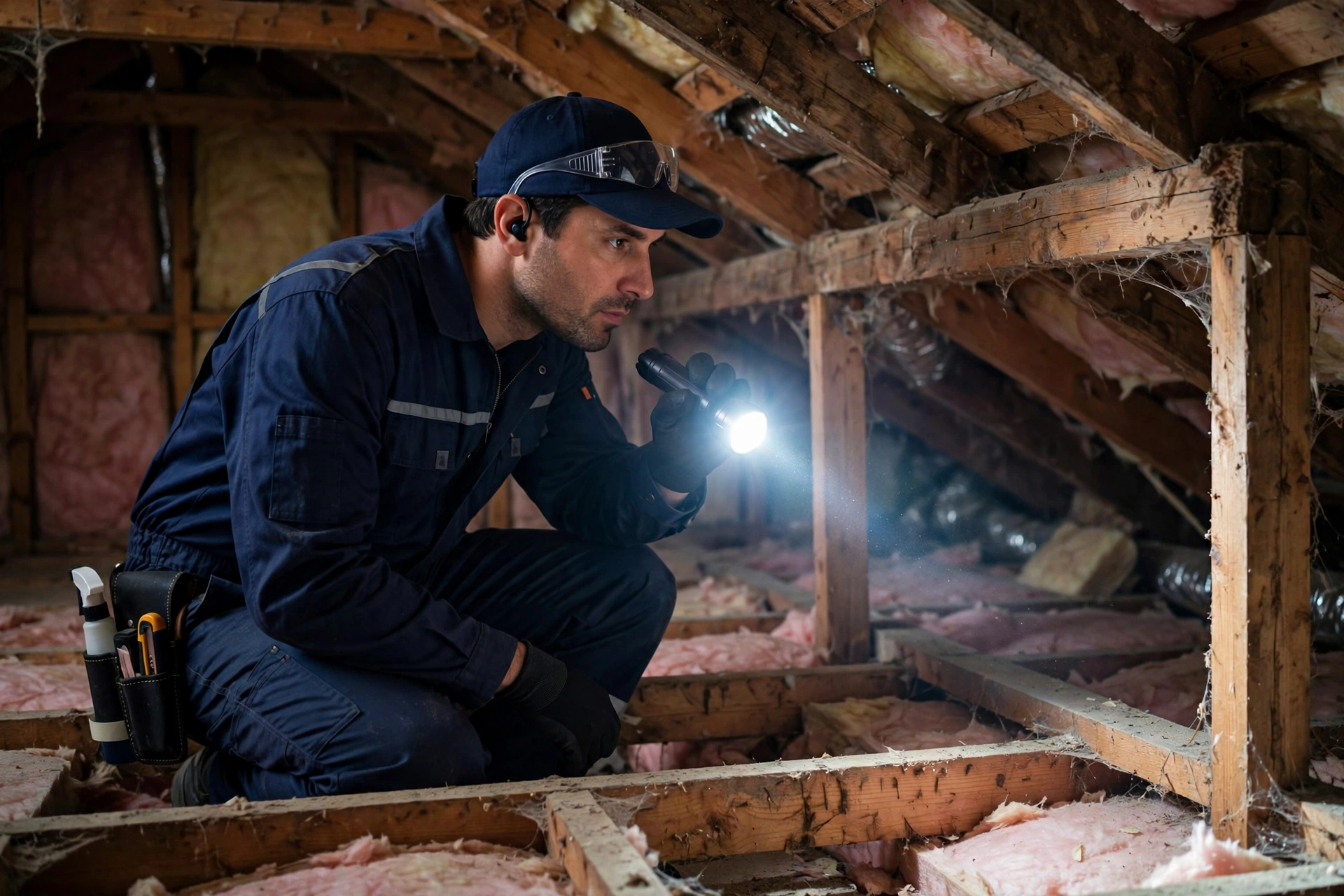
1. Free inspection with a real species ID. We don't guess. We look at droppings, entry points, rub marks, and burrow evidence, and we tell you exactly what's in your house.
2. Professional trapping. For rats, we use larger snap traps placed along confirmed ground-level runways — foundation walls, crawlspace entries, garage perimeters. On the exterior, locked tamper-resistant bait stations that kids and pets can't open.
3. Full exclusion. We seal every entry point with galvanized steel mesh, metal flashing, hardware cloth, and cement. For Norway rats, that means ground-level work: foundation vents, sewer line entries, garage door seals, and gaps around water lines.
4. Cleanup. Rat droppings and urine get removed with masks, gloves, and commercial-grade disinfectant. Contaminated insulation gets replaced.
5. Monitoring and guarantee. If any rodent activity comes back between visits, we re-treat at no cost. Exclusion work carries a 12-month warranty on a monthly plan.
Why DIY Rat Control Fails
Store-bought traps in the wrong spot sit untouched. Rats — especially Norway rats — are wary of new objects. A trap from the hardware store placed where the rat doesn't travel will sit there for weeks.
Poison makes rats die in your walls. Over-the-counter bait sends rats into wall voids and under insulation to die. The smell lasts weeks. In a cabin closed up for winter, it's brutal by spring.
Trapping without sealing is a revolving door. You catch what's inside, but the gaps are still open. New rodents come in through the same holes. Without exclusion, the problem comes back every time.
Rat Removal FAQs — South Lake Tahoe
Do I have roof rats in my attic?▾
Probably not. Roof rats are rare at 6,225 feet. They live in coastal areas, valleys, and the lower Sierra foothills. Scratching in a South Lake Tahoe attic is almost always deer mice or house mice. We confirm the species during the free inspection — because the treatment depends on it.
What are the signs of Norway rats?▾
Large droppings (olive-sized), burrow holes 2 to 4 inches across along the foundation, heavy movement in the crawlspace, and strong musky odor. They're uncommon up here, but they do appear near the lake shoreline and the Tahoe Keys canals.
How do you tell a rat from a mouse?▾
Dropping size is the fastest test — grain of rice means mouse, olive means rat. Sound is the second test — light quick scratching means mice, heavy slow movement means rats. We confirm all of this during the inspection.
How long does rat removal take?▾
Most jobs see a big drop in activity within 7 to 14 days. Full elimination with trapping and exclusion takes 2 to 4 weeks. If you've been dealing with it for months, we should still see real progress within 30 days.
Are your rat treatments safe for kids and pets?▾
Yes. Snap traps go in secured locations — crawlspaces, wall voids, locked bait stations on the exterior. We never place loose poison inside your home. Not a chance.
What if the rats come back?▾
We come back and handle it at no cost. That's the Rodent-Free Guarantee. On a monthly plan, exclusion work carries a 12-month warranty — if rats get back in through anything we sealed, we fix it free.
Stop Guessing. Find Out What's Actually in Your Walls.
A free inspection gives you the species ID, the entry points, the photos, and the exact price to fix it. No guessing, no pressure.
Call (530) 203-0122 · Schedule Your Free Inspection