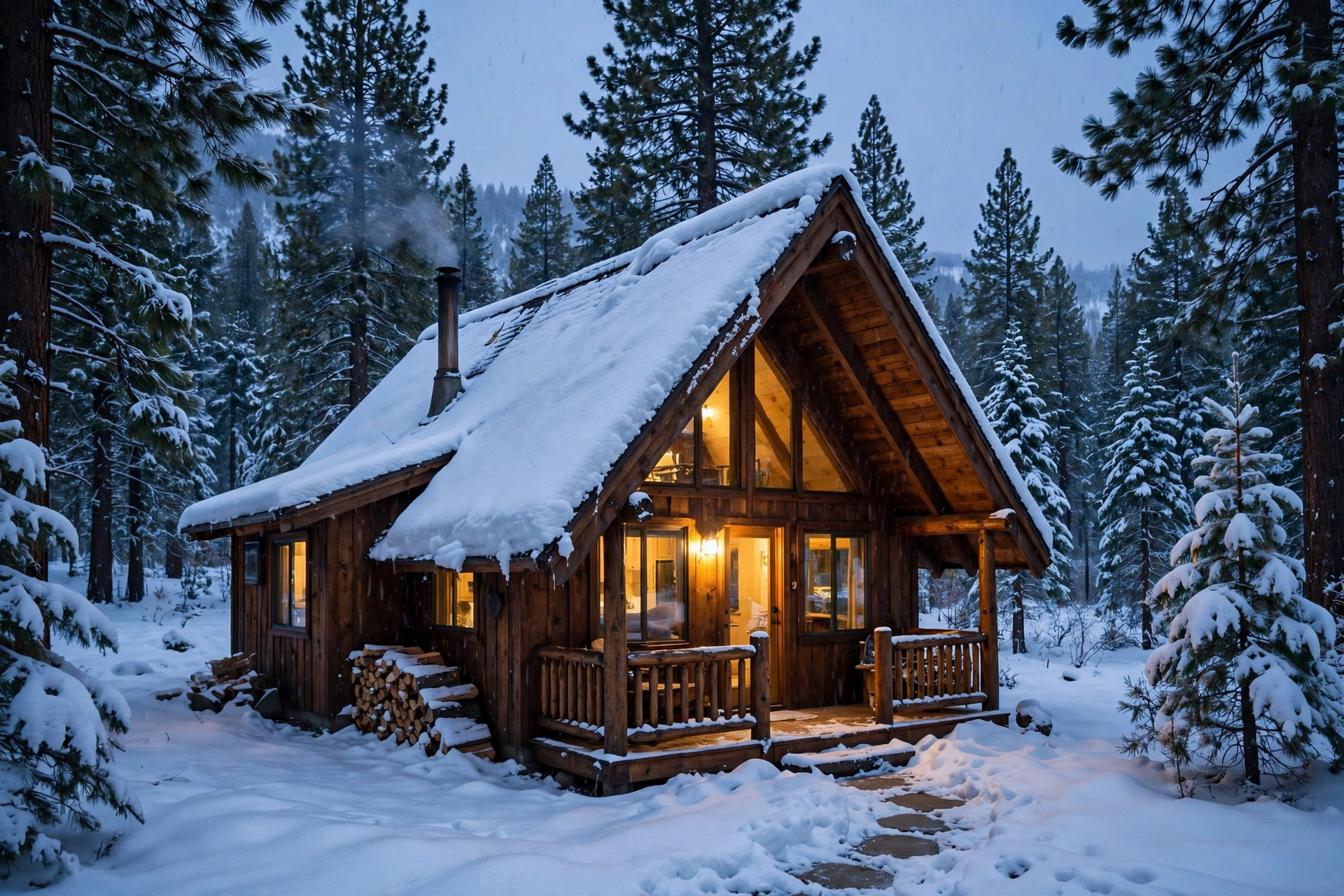
Snow Damage & Rodent Entry Points — South Lake Tahoe, CA
Ice dams lift flashing. Snow load cracks vent screens. Freeze-thaw cycles widen gaps around the foundation. Heavy snow piled against the house pushes access doors out of alignment. A home that was sealed tight in October can have fresh mouse-sized openings by February — and you won't know until the scratching starts.
Sealing is the part that actually ends the problem — see how our rodent-proofing and exclusion in South Lake Tahoe works, from the free inspection to the 12-month warranty.
Spring is when we find the damage. And spring is when you should get your house inspected.
Call (530) 203-0122 · Free Inspection
How Snow and Ice Create Entry Points
Ice Dams Lift Flashing and Roof Edges
An ice dam forms when snow melts on the warmer upper roof, runs down, and refreezes at the colder eave edge. The ice builds up, backs water under the shingles — and physically lifts the metal flashing and drip edge along the roofline.
Here's the thing: when that flashing lifts even a quarter inch, it's no longer sealed. A deer mouse needs a quarter inch. Come spring, the ice melts, the flashing settles back — but not all the way. There's a gap now. Mice find it within days.
We see this constantly on SLT homes after heavy snow years. The roofline that was tight in fall is compromised by March.
Snow Load Cracks and Crushes Vent Screens
Foundation vents, gable vents, soffit vents — they're all vulnerable. Snow piled three feet deep against the foundation puts direct pressure on foundation vent screens. Older wire mesh, already weakened by rust, cracks or pops out of its frame. Snow sliding off the roof shears soffit vents. Ice buildup around gable vents warps the frames.
Every damaged vent is an open door. And vents are the #1 entry point we seal on mountain homes.
Freeze-Thaw Widens Every Gap
Water gets into a crack in October. It freezes in November and expands — ice expands with enormous force. It thaws in a warm spell, seeps deeper, freezes again. Every cycle widens the crack a little more.
Around foundations, this opens gaps between the concrete and the wood sill plate. Around pipe penetrations, it loosens the seal. Around the chimney, it cracks the mortar. By spring, gaps that were too small for a mouse in fall are mouse-sized.
Snow Against the House Hides Activity
Deep snow against your foundation creates a protected, relatively warm tunnel zone where mice travel freely all winter — hidden from predators and from you. It also hides the evidence: no visible droppings, burrow holes, or gnaw marks under four feet of snow. When it melts in spring, the evidence appears — along with the mice that lived against your foundation for months.
Garage Door Seals Get Destroyed
Snow and ice packed against the garage door freeze the rubber bottom seal to the ground — when you open the door, the seal tears. Now there's a gap along the bottom of the biggest door in your house. Side seals warp the same way. We check every garage door seal on every spring inspection because they're damaged more often than not.
Roofline Separations from Snow Weight
Heavy Tahoe snow puts tremendous weight on the roof structure. Over a long winter, that weight causes subtle shifts — fascia pulling from the roof deck, eave joints opening, porch-roof junctions separating by a fraction of an inch. A fraction of an inch is all a mouse needs.
The Spring Melt Reveals Everything
When the snow melts in April and May, here's what gets exposed:
- Burrow holes along the foundation that were hidden all winter
- Droppings accumulated in the snow-free zone against the house
- Damaged vent screens — cracked, popped out, or chewed through
- Gnaw marks on siding, trim, and foundation-level wood
- Nesting material in areas that were sheltered by snowpack
- Dead vegetation that's been tunneled through by mice traveling under the snow
This is why a spring inspection is so valuable. The evidence is fresh, the damage is visible, and we can seal everything before the summer — when mice are breeding and looking for new territory.
Our Spring Inspection — What We Check
After a Tahoe winter, we go over your house with fresh eyes:
Roofline and eaves — lifted flashing, separated fascia, ice dam damage, gaps at the roof-wall junction. We check every linear foot.
All vents — foundation, gable, soffit, dryer, bath fan. Cracked screens get replaced with 1/4-inch galvanized hardware cloth.
Foundation perimeter — freeze-thaw gaps, new cracks, burrow holes, sill plate separations. Sealed with hydraulic cement, copper mesh, and steel mesh as appropriate.
Garage doors — bottom seals, side seals, corner gaps. Replaced or supplemented with commercial-grade threshold and brush seals.
Utility penetrations — every pipe, wire, and cable entry loosened by freeze-thaw. Re-sealed with steel wool, escutcheon plates, and sealant.
Crawlspace access and attic entry points — snow-shifted doors, new gaps, and any mice that got in over the winter (we trap before we seal).
The inspection is free. You get photos of everything we find and a straight answer about what it costs to fix.
Why This Matters More at 6,225 Feet
Lower-elevation homes deal with rain. We deal with snow — months of it, feet of it, the kind of snow that physically reshapes a house over a single season.
The cycle up here is brutal and predictable:
- September/October — First snow. Mice rush indoors. The houses that aren't sealed get their winter residents.
- November–March — Deep snow. Ice dams form. Freeze-thaw cycles work on every crack. Mice live inside, breeding, while new damage opens new entries outside.
- April/May — Melt. Damage revealed. Mice that wintered inside are now established colonies. New mice are looking for spring territory.
- June–August — Breeding season outdoors. The population around your house explodes. Fall exclusion becomes urgent again.
A house that skips the spring inspection enters this cycle blind. A house that gets checked every spring stays ahead of it.
Snow Damage FAQs — South Lake Tahoe
How much does a spring inspection cost?▾
Nothing. The inspection is free — full walkthrough, photos of everything we find, and a straight quote if work is needed. One-time rodent removal starts at $199. Removal plus full exclusion starts at $349. Monthly protection plans run $49–$59/month.
Can you tell if ice dams damaged my roofline?▾
Yes. We know what ice dam lift looks like — the subtle separation of flashing, the slight bowing of the drip edge, the gaps that open at the eave. We'll show you photos so you can see it yourself.
My house was sealed last fall. Do I still need a spring check?▾
Honestly? Yes — at least a quick one. Winter creates new entry points that didn't exist in fall. If you're on our monthly protection plan ($49–$59/month), we're already watching for this through the winter. If you're not, a spring inspection catches what the snow did.
What's the most common snow-related entry point you find?▾
Damaged foundation vent screens, by a wide margin. Snow piled against the foundation cracks the old mesh, and mice walk through the gap. Second most common: garage door bottom seals torn by ice.
Should I clear snow away from my foundation?▾
It helps. Snow piled against the house creates that insulated tunnel zone mice love, and it puts pressure on vents and seals. Keeping a few feet clear around the foundation reduces both the damage and the cover. Don't risk injury doing it — but if you can keep it clear safely, do.
Do you do the exclusion work in spring, or should I wait until fall?▾
Spring. Seal the damage now, before summer breeding season ramps up the outdoor population. Waiting until fall means giving mice all summer to find and use the new gaps. Fix it when you find it.
What if I find mice in the house during the spring melt?▾
Call us. Spring is one of our busiest seasons for exactly this reason — winter residents revealing themselves as the house warms up and activity increases. We'll trap what's inside, seal the new entries, and get you sorted.
Don't Let Winter Win Twice
The snow did its damage. Now let's fix it before the mice settle in for another season.
Call (530) 203-0122 · Free Spring Inspection · We Find What Winter Broke