Crawlspace Rodent Control — South Lake Tahoe, CA
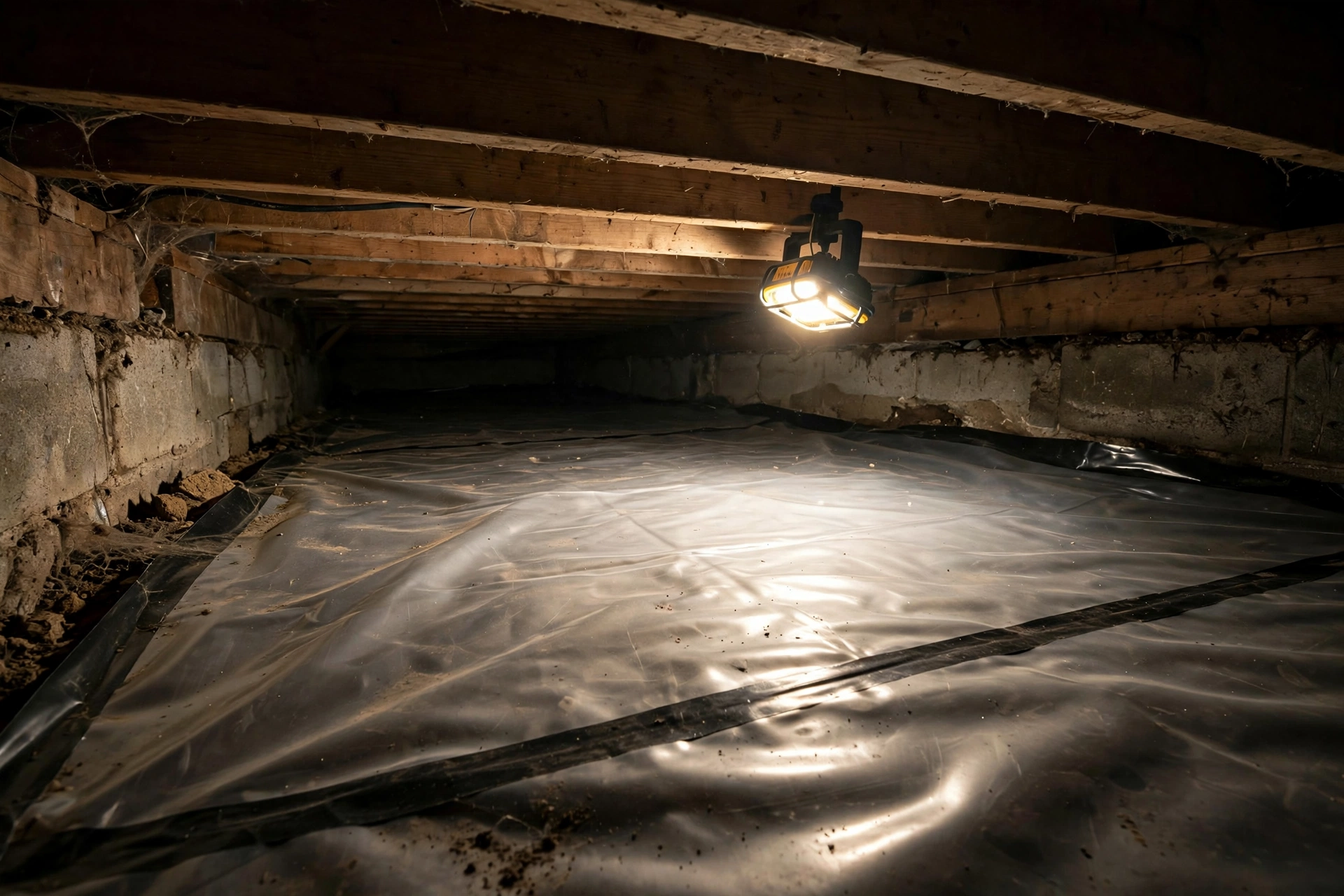
A lot of South Lake Tahoe homes and cabins sit on pier foundations or have low crawlspaces. Crawlspaces are prime rodent real estate — dark, undisturbed, and protected from the snow and wind that rage outside all winter. Deer mice and house mice move in during the fall and set up shop. Nobody goes down there. By the time you notice, they've been chewing ducts, dragging down insulation, and soaking the vapor barrier in urine.
Hearing them inside the house is the sign to act — our mice removal in South Lake Tahoe starts with a free same-day inspection.
We go under the house, trap what's down there, seal every way they got in, and clean up the damage.
Call (530) 203-0122 · Free Inspection
Why SLT Crawlspaces Are Rodent Magnets
A huge number of South Lake Tahoe homes — especially older cabins in Bijou, Al Tahoe, Gardner Meadow, and Tahoe Paradise — sit on raised pier foundations with enclosed crawlspaces. That gives rodents a sheltered, ground-level habitat with:
- Warmth — insulated from wind and snow, often warmed by radiant heat from above
- Shelter — dark, quiet, almost never disturbed
- Moisture — snowmelt, pipe condensation, and ground moisture collect under mountain homes
- Access to the house — every pipe, gas line, and wire through the subfloor is a highway into your walls
When the first snow hits in September or October, deer mice flood into these spaces. A vacant second home's crawlspace can sit occupied all winter without anyone knowing — which is exactly why we recommend winter monitoring plans for owners who aren't here year-round.
Common Crawlspace Entry Points We Find in SLT
Foundation Vent Screens
Crawlspaces need airflow, so foundation vents are standard. But the original wire mesh on older SLT homes has had decades of Sierra winters beating on it. Rust weakens the mesh, rodents chew through the thin spots, and suddenly the vent is an open door.
How we fix it: 1/4-inch galvanized hardware cloth, secured with masonry screws into the foundation. Keeps airflow moving. Blocks everything bigger than a quarter inch.
Access Door and Hatch Gaps
A lot of crawlspace access doors on mountain cabins are just plywood leaned against the opening. Snow and wind shift them, gaps open along the edges, and mice walk right in.
How we fix it: Properly fitted access cover with weatherstripping, or metal flashing around the perimeter if the opening is irregular.
Plumbing and Utility Penetrations
Every pipe and line through the crawlspace floor or foundation wall went through a hole bigger than the pipe. The installer ran the line and left; nobody sealed the gap. Deer mice fit through a quarter inch — they walk straight through.
How we fix it: Steel wool packed tight, topped with a metal escutcheon plate. For bigger gaps, copper mesh with hydraulic cement for a permanent seal.
Sill Plate Gaps
On older pier-and-post cabins, freeze-thaw cycles open gaps between the wood sill plate and the concrete pier. A quarter-inch gap is all a deer mouse needs.
How we fix it: Sill seal with a steel mesh backer. Foam alone doesn't stop rodents — the steel behind it does.
Snow-Caused Damage
This one's specific to our winters. Heavy snow and ice piled against the foundation can crack vent screens, push access doors out of alignment, and open new gaps. We've seen crawlspaces that were perfectly sealed in October and compromised by January. That's why a spring inspection matters up here.
Signs of Rodents in Your Crawlspace
You probably don't go under the house. But here's what you'll notice from upstairs:
- Scratching or thumping under the floor, especially at night
- Musty, ammonia-like odor from floor vents — urine soaking into crawlspace insulation or the vapor barrier
- Insulation hanging down visible through the access hatch — rodents pulling it down for nesting
- Higher heating bills — damaged floor insulation bleeds your heat into the crawlspace
- Droppings near foundation vents — walk the exterior perimeter and look along the base of the house
- Uneven cold spots in your floors
Our Crawlspace Rodent Control Process
1. We Go Under the House
Hands and knees in most crawlspaces, belly-crawl in the tight ones. We check every vent, penetration, support post, and the full perimeter — droppings, nesting sites, gnaw marks, damaged insulation, torn vapor barriers, compromised vent screens. You get photos of everything.
2. We Trap What's Down There
Professional snap traps go along confirmed runways — near the foundation wall, along support beams, at entry points. Exterior tamper-resistant bait stations go around the foundation to knock down the outdoor population feeding the problem.
3. We Seal Every Entry Point
Vent screens, access doors, pipe penetrations, sill plate gaps, burrow entries — all sealed with rodent-proof materials: galvanized hardware cloth, metal flashing, steel wool, copper mesh, hydraulic cement. Real materials. Not foam and caulk.
4. Vapor Barrier Replacement (If Needed)
If your vapor barrier is torn, chewed, or saturated, we replace it with a proper 6-mil or 10-mil barrier. It cuts moisture and makes future inspections easy — fresh droppings show up clearly on a clean surface. Quoted separately after the inspection.
5. Insulation Repair
If rodents pulled down or contaminated the floor insulation, we remove the damaged sections and reinstall. In our winters, intact floor insulation is what keeps your heat where it belongs.
Why DIY Crawlspace Work Doesn't Cut It
Sealing a foundation vent with hardware cloth from the hardware store? Sure, you can do that one. The problem is the other 14 entry points you don't know about.
The hantavirus warning applies double down here. Deer mice are the dominant species in SLT crawlspaces, and they carry hantavirus. An enclosed crawlspace with months of accumulated droppings is exactly where contaminated dust builds up. We do this work in full PPE with HEPA filtration for a reason.
Missing one gap keeps the whole problem alive. A crawlspace has dozens of penetrations — plumbing, electrical, gas, ductwork, support posts. Seal 90% of them and the mice keep using the last one. Most DIY efforts fail not because the sealing was bad, but because the inspection was incomplete.
Crawlspace Rodent Control Pricing
Our pricing follows the same schedule as the rest of our work:
| Service | Price |
|---|---|
| Inspection | Free |
| One-Time Rodent Removal | Starting at $199 |
| Removal + Full Exclusion | Starting at $349 |
| Monthly Protection Plan | $49–$59/month |
Vapor barrier replacement and floor insulation repair are quoted separately after the free inspection.
Crawlspace Rodent FAQs — South Lake Tahoe
Can I just seal the foundation vents myself?▾
You can cover obvious vent holes with hardware cloth. The harder part is finding every pipe penetration, sill plate gap, and snow-damaged entry point around the full perimeter — and doing it without trapping first. One missed gap is all it takes. And trapping before sealing is critical, because sealing mice inside a crawlspace creates a dead-animal problem.
Is there a health risk from droppings in the crawlspace?▾
Yes — especially up here. Deer mice carry hantavirus, and crawlspaces are enclosed spaces where contaminated dust accumulates. If you ever go under the house, wear a respirator and gloves at minimum. Better yet, let us handle it.
My floor vents smell like ammonia. Is that rodents?▾
Probably. Rodent urine soaking into crawlspace insulation and vapor barriers creates a strong ammonia odor that gets pushed up through floor vents. A dead animal creates an intense, sour decomposition smell instead. We'll identify the source during the inspection.
Do you work under houses in winter?▾
Yes. Snow doesn't stop us. Deep winter is when crawlspace rodent activity is at its worst — so don't wait until spring.
How long does crawlspace exclusion last?▾
Permanently, if it's done right. Galvanized steel mesh and metal flashing don't degrade under normal conditions. Our exclusion work is backed by a 12-month warranty when you're on a regular prevention plan. If rodents get back in through anything we sealed, we fix it free.
We'll Go Under Your House So You Don't Have To
Call (530) 203-0122 · Free Inspection · We Do the Crawling