Mice Chewing Car & RV Wiring — South Lake Tahoe, CA
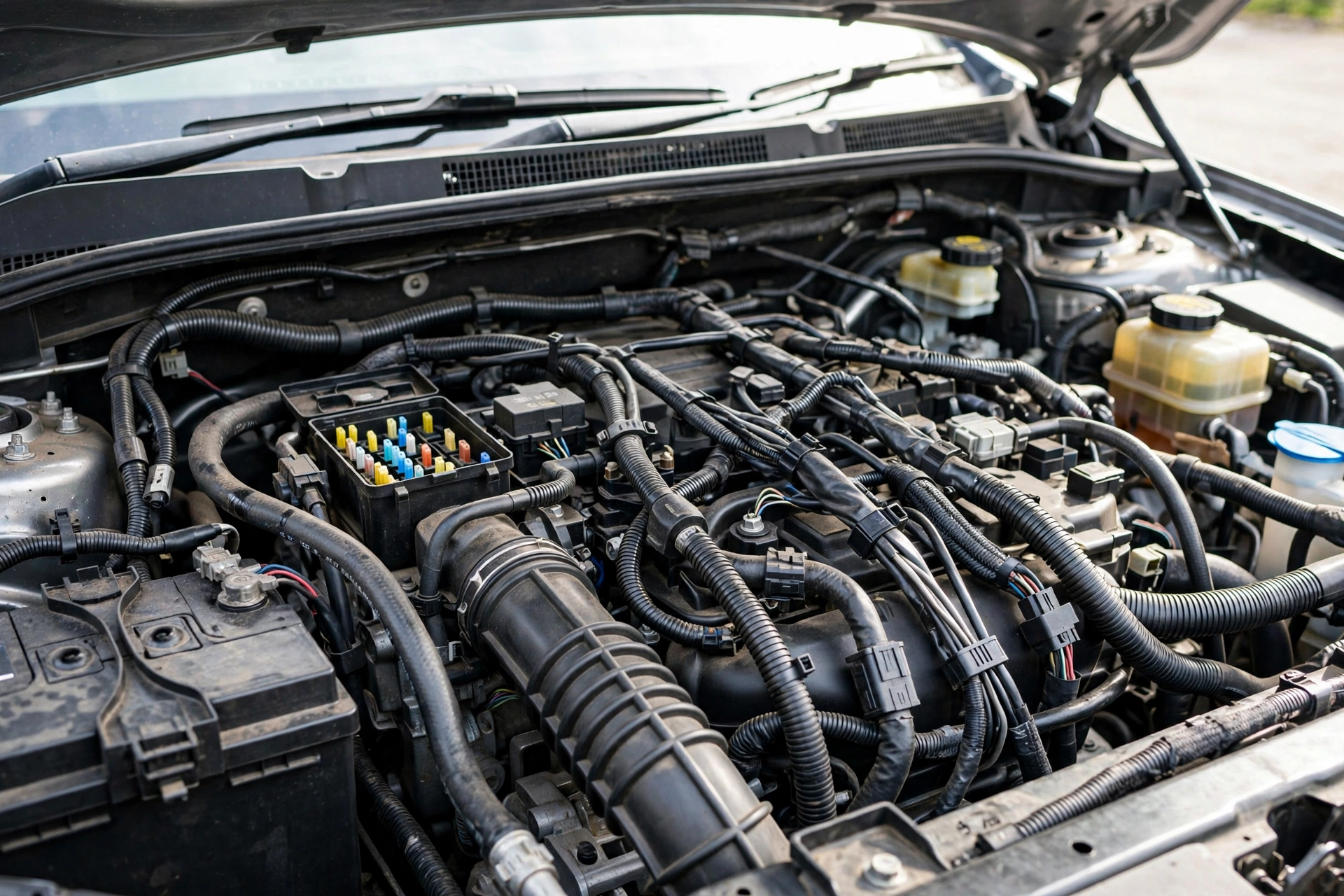
This happens all winter in South Lake Tahoe. Mice — mostly deer mice — get into engine bays, chew wiring, build nests in air filters, and cause damage that runs from a $200 repair to a $3,000 wiring harness replacement.
Before you book, see what rodent control costs in South Lake Tahoe: inspection free, one-time removal from $199, full exclusion from $349.
Here's why it happens, how to prevent it, and what to do when they've already moved in.
Call (530) 203-0122 · Free Inspection
Why Mice Love Your Car in Winter
From a deer mouse's perspective, your parked car is a five-star hotel:
Warmth. After you drive, the engine bay stays warm for hours. On a 15-degree Tahoe night, that residual heat is irresistible. Mice crawl in through the wheel wells or gaps around the firewall — and they stay.
Shelter. The engine compartment is enclosed, dark, and protected from wind, snow, and predators. Air filter boxes are mouse favorites — enclosed, insulated, and full of soft filter material to shred.
Chewing material. Modern car wiring uses soy-based insulation on many wire coatings. To a mouse, it doesn't just feel good to chew — it smells and tastes like food. Their teeth grow 4 to 5 inches per year and require constant gnawing; the soy-based coating makes it even more attractive.
Nesting material. They shred the cabin air filter, the engine air filter, hood insulation pads, and any fabric or paper they can reach. We've opened hoods and found nests the size of a softball built entirely from shredded air filter.
The Tahoe Winter Storage Reality
This problem is worse here than in most places, for specific reasons:
Cars sit for days. In a mountain town, it's normal for a car to sit unmoved for a week during a storm cycle — or all winter if it's a second vehicle. A car that doesn't move is a car that mice colonize. Daily-driven cars get disturbed; parked cars become habitat.
Second vehicles and project cars. That truck you only use in summer. The RV parked for the season. Anything that sits still from October to April is at extreme risk.
RVs and campers. RVs are the worst case — big, full of hidden spaces, sitting for months, often with food inside. Mice enter through the undercarriage, slide-outs, utility ports, and plumbing. Once inside, they chew wiring, contaminate the living space, and nest in the insulation.
Garages aren't safe either. If mice are in the garage — and in SLT, they often are — the car is just the warmest spot in a space they already occupy.
What Mice Actually Damage
This isn't just an annoyance. Here's what we see:
Engine wiring harnesses. The big one. Mice chew through wire insulation, exposing copper — causing shorts, sensor failures, check engine lights, and no-start conditions. A damaged main harness can cost $1,500 to $3,000+ to replace.
Cabin air filters. Shredded for nesting. You turn on the heat and get mouse droppings, urine, and filter debris blown through the vents — a health issue, especially with deer mouse contamination and hantavirus risk.
Hood insulation pads. Chewed and nested in.
Washer fluid lines and vacuum hoses. Thin rubber and plastic lines are easy chewing. Washers stop working; vacuum leaks cause rough running.
Air intake systems. Nests built inside the intake restrict airflow — in bad cases, nesting material gets sucked into the engine.
Interior wiring. Mice that get into the cabin chew dashboard wiring and headliner material, and leave droppings in the glove box and console.
Prevention — What Actually Works
Here's the honest breakdown. Some of this works great. Some of it is wishful thinking.
What works:
Drive the car regularly. The single best deterrent. A car that moves every day or two doesn't become a nest — vibration, heat cycling, and disturbance keep mice out.
Seal the garage. Sealed entry points, no gaps under the door, vent screens intact. A mouse-free garage means a mouse-free car.
Remove attractants. No food in the car or the garage near it. Pet food and birdseed in the garage are mouse magnets that bring them right to the vehicle.
Peppermint oil and repellent sprays — short term only. Some effect for a few days, but mice habituate fast, and in deep winter a warm engine bay beats a bad smell every time.
Keep the hood open when parked long-term. Counterintuitive but effective — an open hood eliminates the enclosed, dark space mice want. Only works in a garage, not in the driveway during a snowstorm.
What doesn't work:
Mothballs in the engine bay. Doesn't repel mice. Just makes your car smell like a closet.
Dryer sheets. Same story. Mice will literally nest on top of dryer sheets.
Just hoping. The most common strategy. Also the least effective.
For RVs and seasonal vehicles:
Winterization includes rodent-proofing. Seal every exterior penetration — plumbing, electrical hookups, slide-outs, undercarriage — with steel wool and copper mesh. Remove all food. Set snap traps inside, or have someone check the RV monthly through winter.
When They've Already Moved In
You found the nest. Now what?
Don't just clean it and hope. If mice nested in your engine bay, they're living nearby — the garage, under the house, the woodpile. Cleaning the car without addressing the source means they'll be back in a week.
Check the cabin air filter immediately. A contaminated filter blows mouse waste through your vents every time you run the heat or AC. Replace it.
Get the wiring inspected. Chewed insulation isn't always visible. Warning lights or rough running after finding a nest means a mechanic should check the harness — exposed copper can short, and in the worst case it's a fire risk.
Trap the source. We find where the mice are living, trap them along their travel paths, and seal the building so they can't come back. Fix the building, fix the car problem.
Do NOT use poison in or around the car. A poisoned mouse dies inside the dashboard, inside the door panel, or inside the HVAC duct. Now you've got a dead animal smell in the car for weeks and no way to reach it without disassembly. Traps only.
Car & RV Wiring FAQs — South Lake Tahoe
How much does it cost to keep mice out of my garage and car?▾
Our standard pricing applies: free inspection, one-time rodent removal starting at $199, removal plus full exclusion starting at $349, monthly protection at $49–$59/month. Sealing the garage as part of full-home exclusion is the fix that protects the car.
Will my car insurance cover mouse damage to wiring?▾
Sometimes. Comprehensive coverage often includes animal damage, but it depends on your policy and deductible. Check with your insurer. We can provide documentation of the rodent activity if you file a claim.
My RV is parked for the winter. What should I do right now?▾
Remove all food. Seal every exterior gap you can find with steel wool. Set snap traps inside and check them if you can — or call us to set up winter monitoring. An RV that sits from October to May without any attention is almost guaranteed to have mice by spring.
Is it safe to drive with a mouse nest in the engine?▾
Short term, usually — but get it cleaned out promptly. Nesting material near hot engine components is a fire risk, and a nest in the air intake can restrict airflow. Don't ignore it.
Do you treat the car itself?▾
We treat the source — your garage, home, or property. We trap the mice getting into the car and seal the building so they can't come back. For wiring damage itself, you'll need a mechanic.
Fix the Building, Save the Car
The mice in your engine bay are coming from somewhere — the garage, the crawlspace, the shed. We find that somewhere, clear it out, and seal it up.
Call (530) 203-0122 · Free Inspection · Protect the Garage, Protect the Car